Today, as the world marks International Women’s Day, Pakistan stands at a curious crossroads. In the streets of our major cities, the air is filled with the rhetoric of empowerment and the scent of celebratory bouquets. Yet, for the Pakistani woman, March 8 is less about the flowers she receives and more about the invisible “hurdle race” she runs every other day of the year.
As we celebrate the “silent revolution” of women entering the workforce and high-ranking offices in record numbers, we must look at the hard data. The story of the last twenty-five years in Pakistan is a spectacular paradox: women are achieving historic heights in education and civil service, yet they remain tethered by some of the most restrictive socio-economic anchors in the region.
Twenty-five years ago, a woman in a high-ranking office or a PhD program abroad was a celebrated anomaly. Today, she is the standard of excellence. A generation ago, the argument was often made that investing in a girl’s education was a waste of resources; today’s young Pakistani women have resoundingly countered this by turning education into a tool for national leadership.
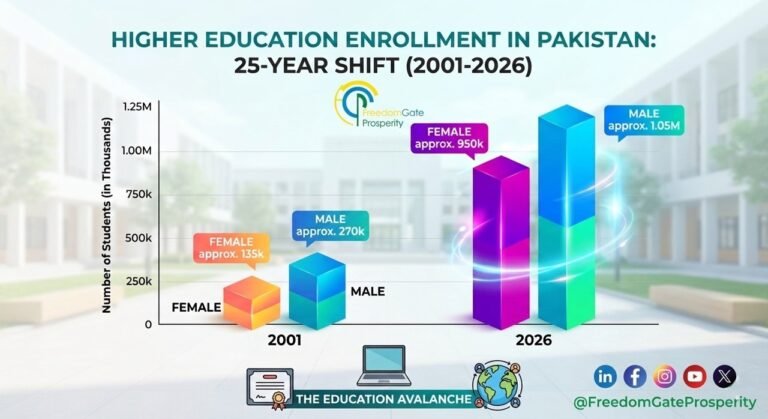
From 2001 to 2026, female enrollment in higher education has increased dramatically. In specific, rigorous disciplines, women are now defining the standard. In Natural Sciences (54%) and Education (67%), they hold a decisive majority. Crucially, in Health and Medicine, women comprise 54% of students, suggesting that the future of Pakistan’s healthcare will be led by female expertise.
The desire for specialized knowledge has also driven a massive surge in international mobility. By 2026, nearly 45% of Pakistani students pursuing postgraduate degrees in the UK, US, and Canada are women, a 400% increase compared to a decade ago. Over 80% of these women are opting for advanced Master’s and PhDs, a clear indication that they are investing in long-term, specialized expertise.
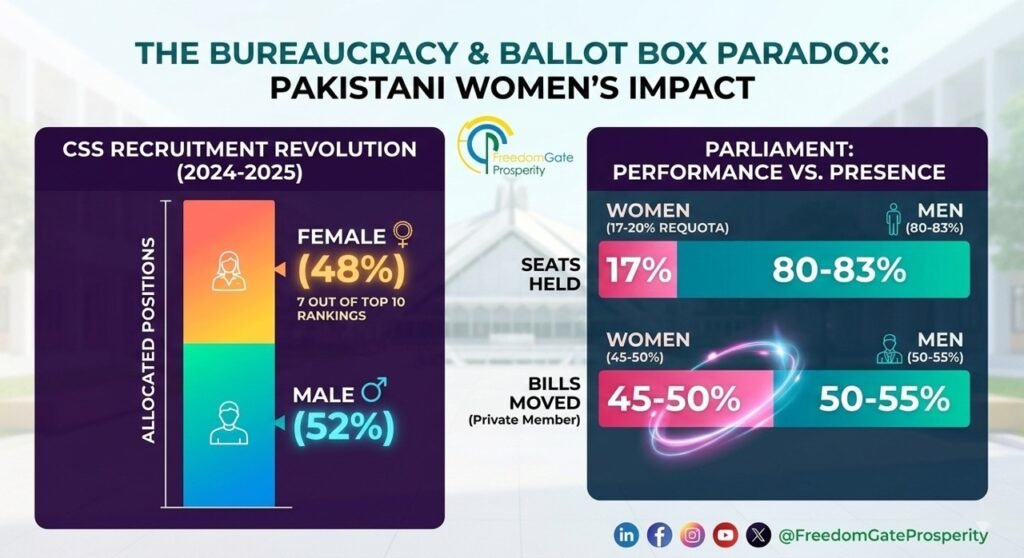
The ultimate proof of this shifting tide is found in the arena where power resides: the Central Superior Services (CSS). The year 2024 witnessed a historical tipping point. In a stunning display of merit, 7 of the top 10 positions nationwide were held by women. Furthermore, women secured an astonishing 48% of the total number of allocated positions, achieving near-parity with men in a field previously dominated by men.
These women are not merely filling numbers; they are taking on “hard” public-facing roles. In the Foreign Service of Pakistan (FSP), women now make up about 25% of the service, leading missions at the UN and serving as Ambassadors. In the Pakistan Administrative Service (PAS), women are increasingly being posted as Assistant and Deputy Commissioners, managing districts that were once considered the exclusive terrain of men.
Workforce: Breaking the Glass Ceiling
The workforce data reveals a “double-edged” reality. While Female Labor Force Participation (FLFP) has nearly doubled since the late 90s (now approximately 22–25%), the real story is in the sectors they are conquering.
The halls of power in Islamabad tell a story of “Disproportionate Impact.” Women may be a minority in terms of seats, but they are a majority in terms of output.
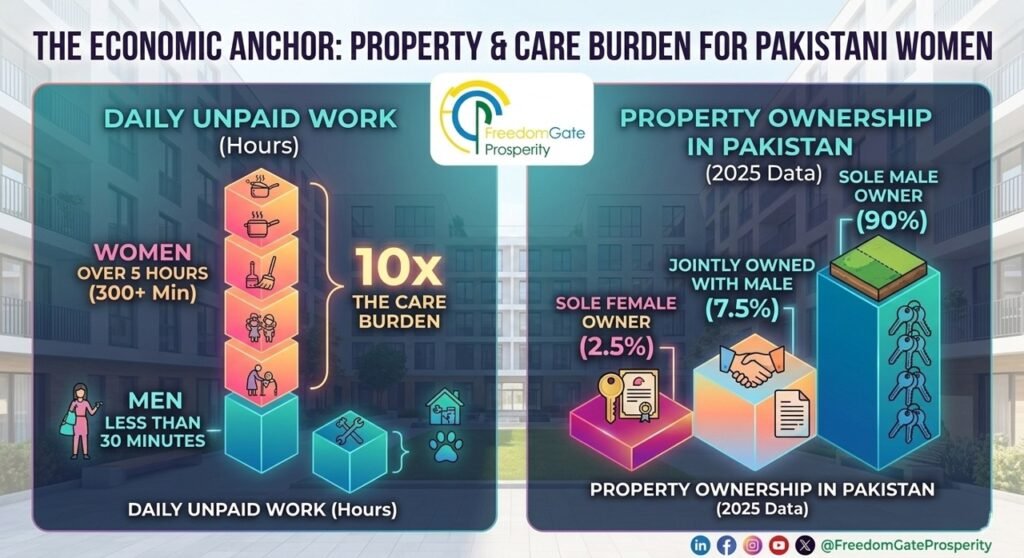
However, this upward trajectory hits a brutal wall when it comes to economic autonomy and the home. This is where the hurdles of a patriarchal society are most visible.
If Pakistan is to turn this “silent revolution” into a national economic engine, we cannot rely solely on women’s resilience. We must dismantle the hurdles:
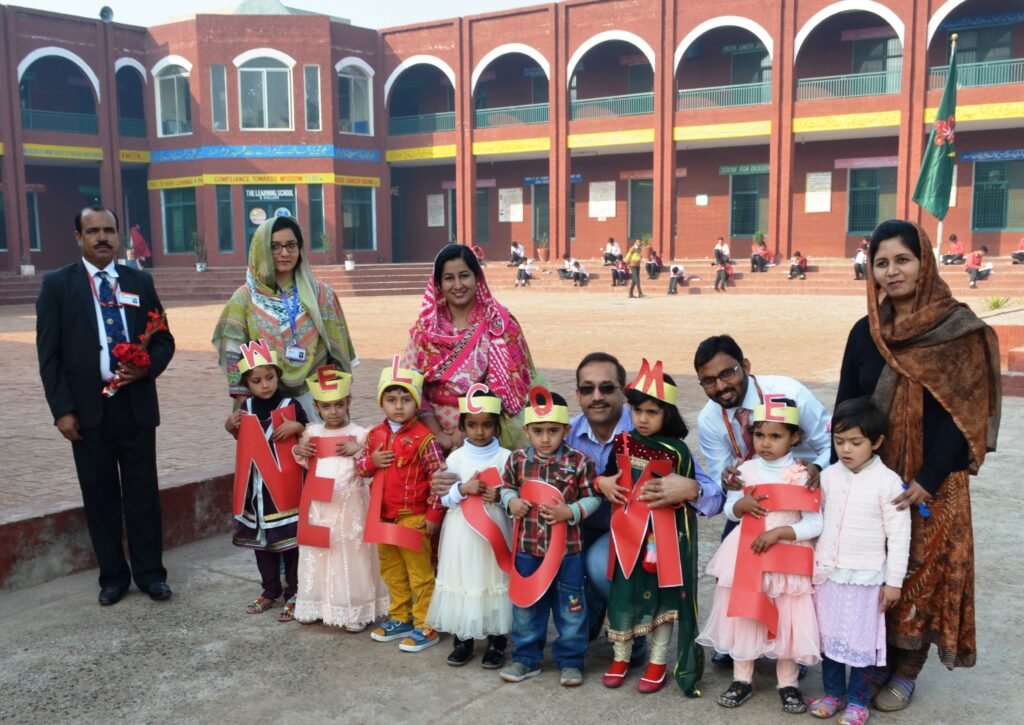
The women of Pakistan have held up their end of the social contract. They have studied harder, performed better, and persevered longer against steeper odds. On this March 8, let us stop asking women to be “resilient” in the face of unfairness. Instead, let us build a system that matches their indomitable spirit. They have won the battles they fought against the current; it is time for the current itself to change..

Muhammad Anwar is a governance and development leader with over three decades of experience in public policy and institutional leadership. As CEO of Freedom Gate Prosperity, he promotes democratic values, inclusive growth, climate resilience, and youth empowerment across Pakistan.
© 2026 Created with Muhammad Anwar