Bhutan had long intrigued me, not for luxury tourism but for its philosophy of Gross National Happiness and its disciplined approach to development. My visit to Thimphu, Bhutan’s capital, combined official engagements with personal exploration, leaving a lasting impression.
Traveling to Bhutan from Pakistan
Our journey began in Islamabad with a transit stop in Bangkok before flying to Paro on Druk Air, Royal Bhutan Airlines. Because of unpredictable Himalayan weather, we scheduled an overnight stay in Bangkok to avoid delays.
For Pakistani travelers, the Bhutan visa process requires prior clearance. Unlike some regional nationals, we needed pre-approved documentation before boarding. With institutional support, our visas were processed smoothly, and final verification took place at the Bangkok airport.
Landing at Paro International Airport is an experience in itself. Surrounded by mountains and designed in traditional Bhutanese style, it immediately sets the tone for a country rooted in culture and restraint.
First Impressions of Thimphu
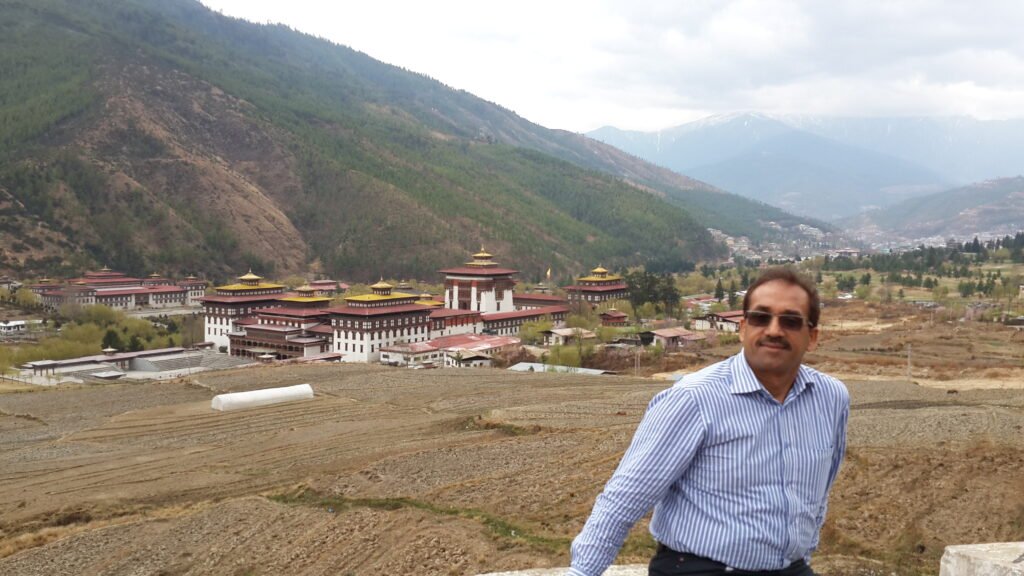
The drive from Paro to Thimphu takes about an hour along scenic mountain roads and river valleys. Thimphu is unlike other capitals — there are no traffic lights. Instead, a police officer directs traffic at the central junction, a small but symbolic detail reflecting Bhutan’s measured pace of life.
We stayed at the Taj Tashi Hotel, which blends Bhutanese architecture with modern comfort and served as our conference venue.
Buddha Dordenma: A Monument Above the Valley
One of the highlights of any Thimphu travel guide is the Buddha Dordenma statue. Standing 51.5 meters tall, this massive Shakyamuni Buddha overlooks the entire valley.
The panoramic view from the site is extraordinary. Beyond its size, the monument symbolizes Bhutan’s spiritual foundation and long-term vision
Visiting the Takin Preserve
We also visited the Motithang Takin Preserve to see Bhutan’s national animal. The Takin, associated with local legend, is unique in appearance and holds cultural importance. A short uphill walk leads to the viewing area.
Hiking to Tango Monastery
With an extra day available, my colleague Aamir Amjad and I hiked to Tango Monastery, also known as Tango University of Buddhist Studies. The 45-minute uphill trail through forested slopes was both physically engaging and spiritually calming.
Along the way, we met a Canadian couple who had once lived in Karachi during the 1960s — an unexpected reminder of how travel connects distant histories
Bhutan’s Development Model
Bhutan stands out globally for its environmental commitment. The Constitution mandates at least 60 percent forest cover at all times, and the country remains one of the world’s few carbon-negative nations.
The philosophy of Gross National Happiness may sound abstract, but in Thimphu it feels tangible — orderly streets, respectful citizens, traditional dress, and visible reverence for the monarchy.
Final Reflections
My visit to Thimphu was professionally structured, yet personally enriching. Bhutan does not compete through scale or speed. It advances quietly, preserving culture, protecting nature, and governing with restraint.
For travelers seeking more than sightseeing — those interested in governance, environmental sustainability, and cultural continuity — Thimphu offers a rare and thoughtful experience.
The mountains of Paro, the calm streets of the capital, and the hilltop Buddha remain vivid in my memory, not merely as tourist attractions, but as lessons in balance and dignity.
Muhammad Anwar is a governance and development leader with over three decades of experience in public policy and institutional leadership. As CEO of Freedom Gate Prosperity, he promotes democratic values, inclusive growth, climate resilience, and youth empowerment across Pakistan.
© 2026 Created with Muhammad Anwar